
The Rise and Fall of Chess on Televison
Chess is a game played throughout centuries of history, we still have written records of played games dating back 1475. By moving towards the early to mid 20th century a new means of spreading chess appeared, the television! Publicly spread to millions of people at once! Together with the political tensions and many legendary players and their rivalries this became a huge turning point in the spreading of chess to a new audience.
The start of chess on TV
After careful research I found that chess on TV was mentioned as early as in 1951, even though before that time there were numerous recordings, but not yet on television. These recordings contain simuls, interviews, matches.
For example the following video from 1935 which is an interview with Max Euwe the only Dutch worldchampion, together with Jose Raul Capablanca on Euwe's chances on his match against Alexander Aljechin:
https://www.youtube.com/watch?v=w9fh3Y72J3c
On October 20th, 1951 an edition of "Chess Life" was published, in which a Woman's U.S. championship tournament would be broadcasted on a TV show called "For your information".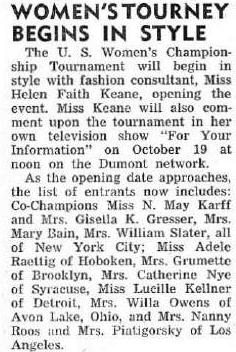 At this moment in time chess was not yet as big as it is today or after the Fischer boom, thus television coverage of chess was still very low, and still in its infancy. Soon after more chess would appear on television, by the nation which overshadowed the rest of the chess world for decades, the Soviet-Union.
The evolution from small fragments to one show
In the 1960s a full chess show came on the public broadcasts of the U.S. called "Koltanowski on Chess" hosted by, you guessed it! George Koltanowski. These were half hour episodes produced by KQED. Sadly nothing of it remains, most of the tapes disappeared in time or were taped over.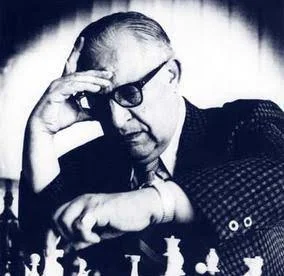 Koltanowski about to make a move.
Chess was always a popular game in the Soviet-Union, it was seen as indicator of the intellectual superiority and used as propaganda for such. To spread this message chess became a national sport and was broadcasted on television to educate the people of the communist state in this mental sport. The oldest and most iconic show was called "Shakhmatnaya Shkola" (Chess School).
This show was hosted by 3 hosts: legendary player Yuri Averbakh, Aleksandr Kotov and Mikhail Yudovich , and ran from 1969-1986.
The show ran weekly where Yudovich taught openings, Kotov discussed middlegames and Averbakh explained endgames as told by Averbakh in an interview in 2016.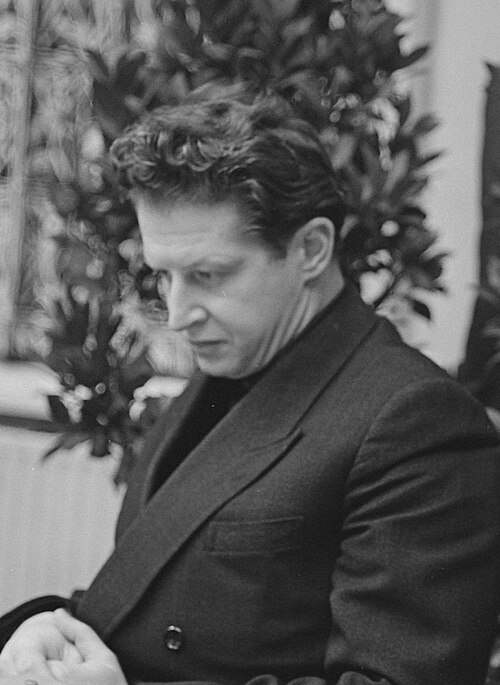 Yuri Averbakh in 1963.
Only 3 years after the release of the Soviet TV-show another sensational event was being broadcast, the centre point of geopolitical tensions and also named "The match of the Century" was no other than the 1972 World championship between Fischer and Spassky.
Sadly due to the eccentric character of "Bobby" Fischer there is not much footage of the match, this was all due to Fischer's demands to have cameras removed after losing the first game and blaming the cameras.
Luckily for us there are rare images still left of game 1 and game 4.
Game 1, Spassky-Fischer, 1-0:
https://www.youtube.com/watch?v=L8MlGHJKAuM
Game 4, Fischer-Spassky, 1/2 - 1/2:
https://www.youtube.com/watch?v=GFOA06krDvE
Television after the Fischer boom
The defeat of Spassky in 1972 was pivotal, the soviet players were merely human and could be defeated, proven by Fischer. This change initiated a boom in the western world and especially in the U.S.
Only 3 years later the BBC (British Broadcasting Corporation) took advantage of this and launched the TV show: "The master game".
Which was hosted by Jeremy James (presentor), Leonard Barden (Chess expert) and IM Bill Hartston (Chess expert, successor of Barden).
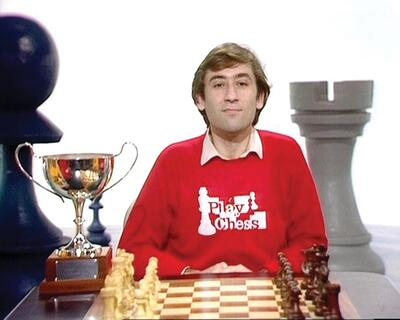 Bill Hartston succeded Barden after winning the master game twice.
The show ran from 1976 until 1983 with the first years having only british players such as: Tony Miles, Bill Hartston, John Nunn, Jonathan Speelman and young Nigel Short. In the 3rd season of the series more international figures were introduced, including: Anatoly Karpov, Bent Larsen, Lothar Schmid and Jan Hein Donner.
In the following seasons more known names followed: Vlastimil Hort, Robert Byrne, Victor Korchnoi, Eric Lobron, Walter Browne and Miguel Quinteros.
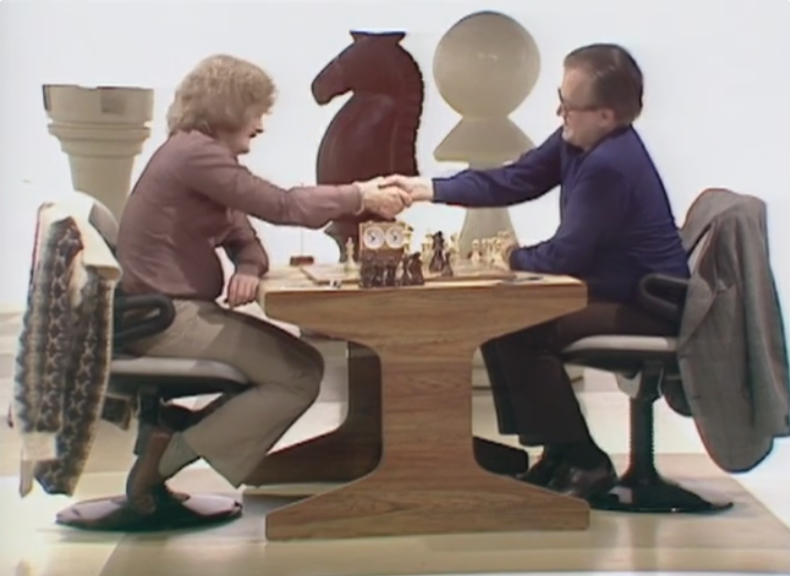 Bent Larsen (Right) shaking hands with Tony Miles (Left) after resigning, handing the win to Miles.
The show itself was credited for being innovative due to the usage of an animated board with figurines accompanied with voice-overs of the players sharing their thought process with the audience.
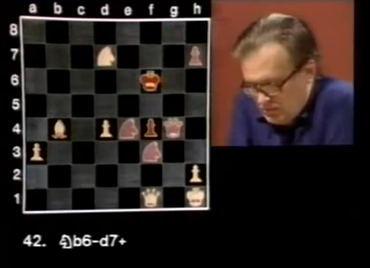 The innovative format of the TV show.
The following game was played between Browne and Quinteros leading to an exciting match in the Najdorf:
https://www.youtube.com/watch?v=CmJin7PFTtg
The next years BBC did not slack and came with a new innovative show, called "Your Move", which allowed the viewers to play a game of chess against GM Jon Speelman. This was done by dialling in and sending a certain number combination designating a move on the board.
There was only a small issue, with dialing the "1" could not be used, so for the "a" and the "1" on the board a "9" was used for dialing.
The show was scheduled for 1 and a half hours but lasted 3 hours!
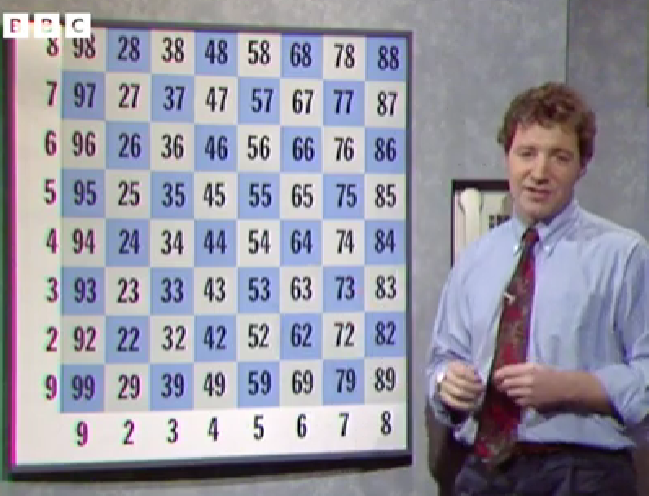 Presentator Rob Curling (Right) explains which number combinations code for which squares when dialing in.
Following is a fragment of the show "Your Move":
https://www.youtube.com/watch?v=QIOwwGIupp0
The decline of chess on television
Chess on television developed some issues going further into the 90s and 00s as the Fischer boom slowly faded. Chess was still big in its community but for the casual watcher the games became too long and complex to follow making viewer rates go down. This meant that chess went back to being a subject in a news article and not a full tv show as before.
Most notable being the match Kasparov lost against IBM's computer "Deep Blue".
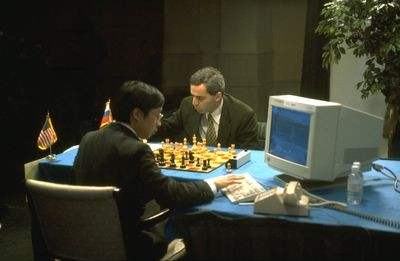 Kasparov (right) playing Deep Blue.
During the early 2000s chess was a niche sport, slowly online platforms rose, but without the broadcasting services as we know today.
This only appeared when sites as Chess.com and Lichess came to be, together with other streaming platforms such as youtube, twitch and kick.
This meant at first that the sport merely switched from the big screen to smaller screen suited for the smaller audience.
 Ding Liren (left) and Gukesh Dommaraju (right) being interviewed by Maurice Ashly (middle) on a livestream.
During COVID chess got another boom, people were locked up inside, wondering what to do. Many ended up with chess and together with the mini-series "Queen's Gambit" chess gained a larger audience, so are we going to see another television boom, next to a player boom?
Can television make a comeback?
I believe yes! It seems that BBC agrees with me. They recently made a new chess TV show called "Chess masters: The Endgame" as a revival of "The Mastergame". The show first aired 10th of march, 2025, with 30 minutes run time per episode. It is presented by Sue Perkins and a chess expert the community is familiar with, GM David Howell!
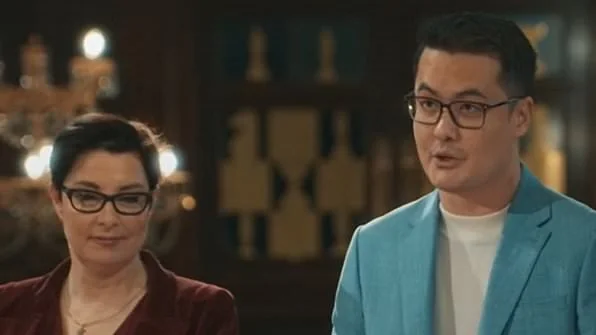 Presentator Sue Perkins (Left) and Expert GM David Howell (Right).
The new show got praises and criticism as any show gets after a first season, so it's up to the reader if it's their cup of tea.
In conclusion, I believe that chess can make a comeback on television, but due to the comfort of streaming services and the issues chess has on public television. The likelihood of chess returning as it was in the golden era of chess is low, simply put chess did not disappear, it only found its way to a different screen.
You may also like
 CM HGabor
How titled players lie to you
This post is a word of warning for the average club player. As the chess world is becoming increasin… thibault
How I started building Lichess
I get this question sometimes. How did you decide to make a chess server? The truth is, I didn't. IM datajunkie
Why your tactics aren’t improving
The 4 fixes that can help you become a tactician RelaxedGames