
What a Figure Skater Can Teach You About Chess Improvement
How an Olympic figure skater's approach to competition, failure, and pressure can make you a better chess playerYou’re sitting down at the board for a tournament game. Maybe you lost last round and you’re still thinking about it. Maybe your opponent is rated 200 points higher than you and you’ve already convinced yourself that you’re going to lose. You haven’t even made your first move yet and you’re already thinking about what’s going to happen to your rating afterwards.
Sound familiar?
I’ve been there too and most of us have. For a long time, I thought the solution to this kind of mental spiral was purely chess-related. Study more openings. Solve more tactics. Prepare better. But after 12 years of coaching students, I’ve come to believe that the biggest thing holding most chess players back has very little to do with chess knowledge. The real barrier is usually the mindset around how we approach the game. How we handle pressure, how we respond to losses, and how we think about the improvement process itself.
This brings me to someone who has absolutely nothing to do with chess but whose mindset might be the best chess improvement advice I’ve heard in a long time.
Her name is Alysa Liu.
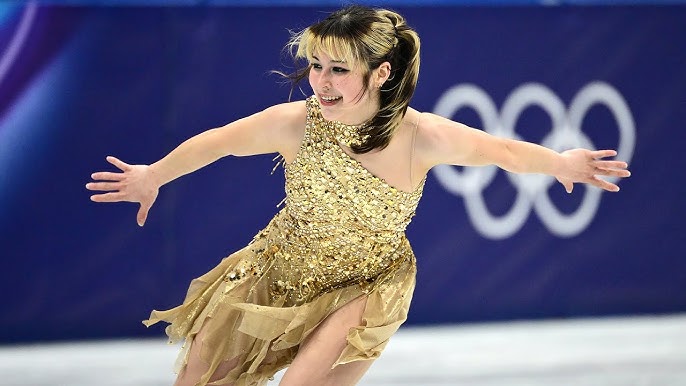
Who is Alysa Liu?
In case you missed it (which would be impressive given how much she’s been all over the internet lately), Alysa Liu is a 20-year-old American figure skater who just won the Olympic gold medal at the 2026 Winter Games. She was the first American woman to win Olympic singles gold since 2002, ending a 24-year drought. But what really caught people’s attention wasn’t just the gold medal. It was the way she talked about competition, pressure, failure, and the process of getting better.
Liu was a child prodigy who became the youngest US women’s figure skating champion at age 13 in 2019. By 2022, she placed 6th at the Beijing Olympics, realized she no longer loved skating, and retired at 16. She spent a couple of years being a normal teenager (she went to college and even hiked to Everest base camp) before coming back to the sport at 19, this time completely on her own terms. She chose her own music, her own costumes, her own hair, and her own creative direction. And then she went out and won the World Championship in 2025 and two Olympic gold medals in 2026.
The quotes she’s given in interviews since her comeback are some of the most applicable things I’ve ever heard when it comes to chess improvement. Let me walk through a few of them.
“I love struggling, actually. It makes me feel alive.”
Liu said this during her 60 Minutes interview (aired January 4, 2026), and it might be the single most important mindset shift a chess player can make.
Most of us avoid the things that feel hard. We play the openings we already know instead of branching out. We solve puzzles at a comfortable difficulty instead of pushing into ones that make our brains hurt. We skip the endgame chapters that feel tedious. And when we sit down to analyze a loss, we skim through it quickly rather than really sitting with the positions where we went wrong.
But the struggle is where the improvement actually happens. The calculation exercise you can’t solve after 20 minutes, the endgame position where you keep choosing the wrong plan, the game you lost that you really don’t want to look at again. Those moments are the chess equivalent of Liu drilling triple axels at 6am. They’re supposed to be hard and that difficulty is the signal that you’re actually working on something meaningful.
I see this constantly when working with students. The ones who avoid discomfort tend to stay stuck at their current level. The ones who lean into it (even when it’s frustrating) are the ones who actually improve over time. Learning to welcome the struggle rather than avoid it might be the most important skill you can develop as an improving player.
“There’s no way to lose.”
The full quote from Liu’s NBC News interview after winning Olympic gold is even better: “What I like to share about myself is my story, my art, and my creative process. I guess messing up doesn’t take away from that. It’s still something. It’s still a story. A bad story is still a story, and I think that’s beautiful. There’s no way to lose.”
If every game you play is an opportunity to learn something, test an idea, or discover a gap in your understanding, then there really is no way to lose. A loss where you tried a new opening line and got punished teaches you something specific about that line. A loss where you misplayed a rook endgame reveals a gap you can now go and fill. Even a loss where you blundered on move 15 teaches you something about your focus and concentration under certain conditions.
I had a student who would tilt after losses and immediately try to play more games to “win the rating back.” He’d fall into these losing sprees that would routinely cost him 50 to 100+ rating points in a single session. The core problem wasn’t that he lacked chess knowledge. He was actually a pretty decent player on his good days. The problem was that every loss felt like a personal failure rather than information. If he had been able to look at each loss the way Liu looks at a stumble on the ice (it’s still a story, it’s still something), the tilt streaks might never have happened. He would have been able to stop, review what went wrong, and come back to the next game with a clear head. Instead, every loss sent him spiraling because he was attached to the result rather than the process.
“Winning isn’t all that. And neither is losing. It’s just something that happens. It’s an outcome. What matters is the input and the journey.”
This one comes from Liu’s TNT Sports interview, and it connects directly to something I think a lot of chess players struggle with: rating obsession.
We’ve all been there. “I want to hit 1500.” “I need to break 2000.” “If I can just get to 1800 by the end of the year.” These are fine as directional goals and I use them with my students too. But when the rating number becomes the only thing you care about, you start measuring every single session by whether the number went up or down. And that creates a ton of anxiety that actually makes it harder to play well.
Rating is a lagging indicator. It follows improvement but it doesn’t cause it. The inputs are what matter. Did you analyze your games honestly after the tournament? Did you study something that addresses a real weakness? Did you play the move you believed in rather than the “safe” move because you were scared of losing rating points? Those are the questions worth asking yourself after a game, and if the answers are consistently yes, the rating will follow. It might not follow on your preferred timeline, but the direction will be right.
“I connect with everything, but I’m not attached to anything.”
This might be the quote from Liu that went the most viral. It showed up everywhere after the Olympics, and for good reason. It captures something that I think is really powerful for chess players to internalize.
You can pour yourself into your preparation. You can care deeply about your opening repertoire and your endgame knowledge and your calculation skills. You can take your improvement seriously and put real effort into getting better. But you don’t have to tie your self-worth to whether your rating went up or down this month, or whether you beat a specific opponent, or whether you hit a particular milestone by a particular date.
There’s a meaningful difference between caring about your chess and being emotionally destroyed by a bad result. The player who is connected but not attached can lose a tough game in a tournament and sit down the next morning with full energy, because their identity isn’t wounded. Their position on the leaderboard shifted, and that’s just information they can use. Versus the player who loses a game and then spirals for the next three rounds because they can’t let it go.
I’ve experienced this myself. During the 2024 Southwest Class Championship, I started with 4/5, including wins over an FM and an IM. Then I played 4 IMs and GMs the rest of the tournament, scoring 2 additional draws. I was one win away from an IM norm in the final round. Looking back, I think a big reason I played well in that tournament was that I went in with the right mindset. I was playing up against mostly higher-rated opponents, and because I was “supposed to lose” against many of them, I felt free. I played the moves I believed in, I didn’t second-guess myself as much as I normally would, and I used my time better because I wasn’t burning clock being anxious about the result.
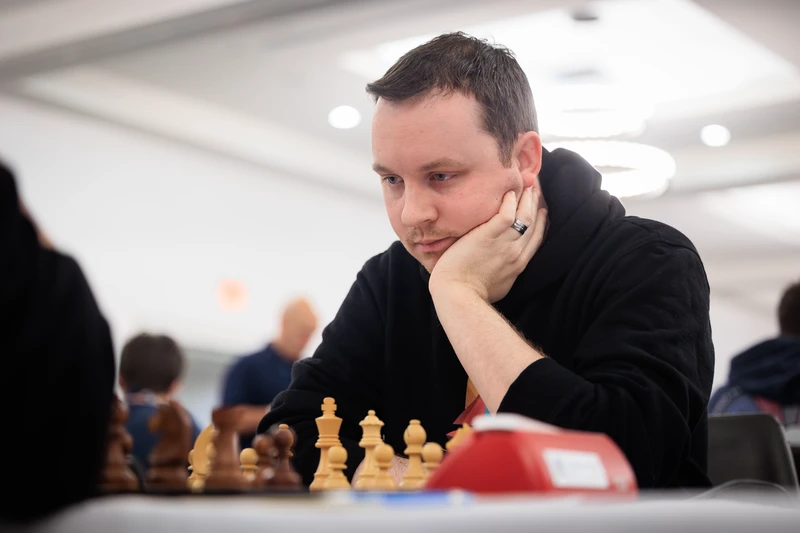
That last part is important. When you’re attached to the outcome, you second-guess yourself. You play safe moves instead of the ambitious ones you want to go for. You burn time on moves you already know are right because you’re scared of making a mistake. This is the chess equivalent of “skating scared,” and it shows up directly as time management problems. I struggle with time management in my own games and I think a lot of that comes from being too attached to the result of the game rather than trusting my preparation and playing freely.
“Take those breaks. You need them. And don’t let anyone push you past your breaking point.”
Liu said this during an Olympic correspondent interview, and the full quote continues: “You are the only one that knows your limit. And you know yourself.” She also said in a separate interview: “Being grounded is really what keeps me. And I love exploring other hobbies. Doing side quests and what not. It keeps me curious.”
Liu retired from skating at 16 because it had become a joyless job. She stepped away, lived her life, and came back as a completely different competitor. The break didn’t set her back. It made her better. She even called her 2025 World Championship-winning season “the starter season” and said she was “just picking up the pieces.” She won the World Championship and still felt like she was warming up.
Chess players are notoriously bad at taking breaks. We grind puzzles every day, play blitz for hours on end, and then wonder why we plateau or start to hate the game. If the joy is gone, the improvement will stall too. You can’t sustain deep work on something you resent.
I experienced something similar during my own career. Between 2013 and 2021, I plateaued around 2275 to 2325 USCF for about 8 years. I wasn’t playing many tournaments during those years, and a big reason was that I’d lost my chess community. My friends had moved away, stopped playing, and moved on to other things. I felt like a lone wolf at tournaments and didn’t have the same drive. Sometimes the best thing you can do for your chess is to step back, come back with fresh perspective, and rediscover why you enjoyed it in the first place. And having interests and hobbies outside of chess (”side quests” as Liu calls them) isn’t a distraction from improvement. It keeps you grounded and prevents burnout.
“Competitions are where I’m least stressed because people get to see what I do. That’s why I do it. So I can share my work.”
Liu said this in an NBC interview before the Olympics, and I think it’s one of the most useful reframes for anyone who gets nervous before tournament games.
Think about it this way. You’ve been studying openings, solving tactics, analyzing master games, working on your endgames. You’ve been putting in the work. And now you get to actually use all of it against a real opponent, in a real game, with real stakes. That’s the whole point of training in the first place.
If you can start to think of a tournament as the stage where you get to show what you’ve been working on rather than a test you might fail, the anxiety drops and gets replaced by something much more useful: enthusiasm. Liu steps onto Olympic ice in front of millions of people and feels less stressed than she does in practice, because the competition is where she gets to share her work. A tournament round should feel the same way for a chess player who has been putting in the effort.
This kind of mental reframe is something that can genuinely be developed with practice. It doesn’t happen overnight and it doesn’t come naturally to most people (it certainly doesn’t always come naturally to me). But it’s a skill, not a personality trait, and that means it can be trained just like any other part of your chess game. This is actually a big part of what I work on with my students. Not just the chess on the board, but the mental game around it. How to show up to a game without the weight of expectations dragging you down.
The Bigger Picture
The common thread through all of Liu’s quotes is a single idea: playing free. She skated free at the Olympics because she had detached her self-worth from the outcome, reconnected with the joy of the process, embraced struggle as fuel, and built a life rich enough that figure skating didn’t have to carry the impossible weight of being her entire identity.
A chess player who absorbs these ideas will sit down at the board in a fundamentally different state. Instead of being the tight, anxious player who avoids complications and plays for draws against higher-rated opponents, they become the player who trusts their preparation, seeks out rich positions, takes risks when the position calls for it, and treats every game (win or lose) as another chapter in a story they’re building.
As Liu put it in an NBC interview after her short program: “Even if I mess up and fall, that’s totally okay too. I’m fine with any outcome, as long as I’m out there.”
Replace “fall” with “blunder” and “out there” with “at the board,” and you have the mindset of a chess player who will keep improving. Not because they’ve found some secret training technique, but because they’ve removed the fear that holds most players back and replaced it with something better.
If any of this resonated with you, I’d love to hear about it. And if you want to work on the mental side of your chess game alongside the actual chess, that’s exactly what I help my students with. Feel free to reach out.
Happy improving!
You may also like
 FM MattyDPerrine
Stop Gatekeeping Opening Study
Why chess players of every rating level should study openings, and what to focus on at each stage FM MattyDPerrine
What Every Chess School Got Right (And What You Can Steal From Each One)
Five training philosophies from five different countries. You don't need to be from any of them to u… FM MattyDPerrine
Chessalyz Update: Flashcards Are Here (+ Full Mobile Support)
A walkthrough of our biggest update yet, including spaced repetition flashcards, full mobile browser… IM datajunkie
Why your tactics aren’t improving
The 4 fixes that can help you become a tactician thibault
How I started building Lichess
I get this question sometimes. How did you decide to make a chess server? The truth is, I didn't. FM MattyDPerrine