
Castling in Chess Is Overrated
For generations, chess players have treated castling as unquestionable. But is it really as essential as we’ve been led to believe?
For centuries, castling has been treated as one of the unquestioned pillars of sound chess. From the earliest beginner lessons to grandmaster commentary, players are told, often with almost religious certainty, to castle early.
But has anyone ever stopped to ask why?
Why has this single move, more than perhaps any other in chess, been elevated to the status of sacred law?
Why is it performed so routinely, so uncritically, so automatically?
And perhaps most importantly:
why does it feel so wrong?
In this article, I aim to challenge one of the most deeply rooted assumptions in chess culture. Through historical analysis, empirical observation, physiological research, and practical experimentation, I will demonstrate that castling may, in fact, be one of the most overrated concepts in all of chess.
I. The Historical Myth of Castling
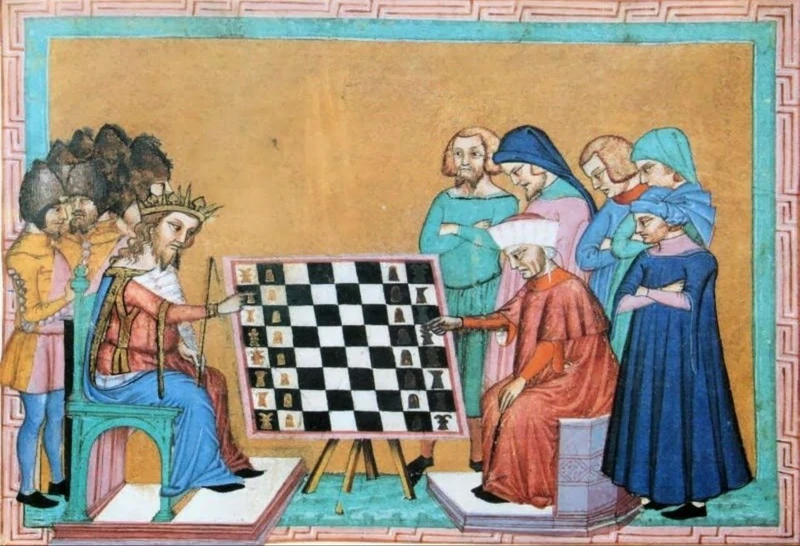
Castling did not exist in early forms of chess.
For centuries, players managed king safety through what we would now call manual king relocation protocols. Kings were walked carefully to safer squares, often over multiple moves, and this process encouraged long-term responsibility, planning, and positional maturity.
Only later did castling emerge as what can only be described as a convenience-based shortcut.
One cannot help but wonder whether castling was truly introduced for strategic reasons—or whether players had simply grown impatient with the dignified process of relocating the king manually.
At what point did chess cease being about responsibility and become about convenience?
II. The Innate Human Aversion to Castling
There is something uniquely unsettling about castling.
Every chess player, at some point in their life, has looked at the move and quietly thought:
“Why are we even doing this?”
This is not a coincidence.
Unlike natural developing moves, like bringing out a knight, centralizing a bishop, occupying the centre, castling often triggers an immediate, almost instinctive resistance.
Something about it simply does not feel right.
This sensation may, in fact, be deeply evolutionary.
Human beings possess ancient survival instincts that help us avoid actions which feel biomechanically or psychologically unnatural. Just as our ancestors instinctively avoided stepping into unstable terrain, the modern chess player often feels a subtle internal warning before castling.
A kind of gut-level hesitation.
The move feels... off.
In the same way that taking the last bit of chocolate milk from a shared fridge is technically permissible, and wouldn't be classified as stealing, yet somehow it's morally questionable, and castling occupies a similar psychological space.
Your hand can make the move.
But your soul recoils.
Now, admittedly, this takes us slightly off-topic, but I have often genuinely believed that God, after spending six days creating the Earth, has devoted the seventh not to rest, as is commonly believed, but to perfecting chocolate milk.
The misconception that He rested on Sunday likely stems from the fact that chocolate milk simply required more refinement than the universe itself.
But I digress.
The point remains:
our aversion to castling may be older than chess itself.
III. The Biomechanical Burden of the Move
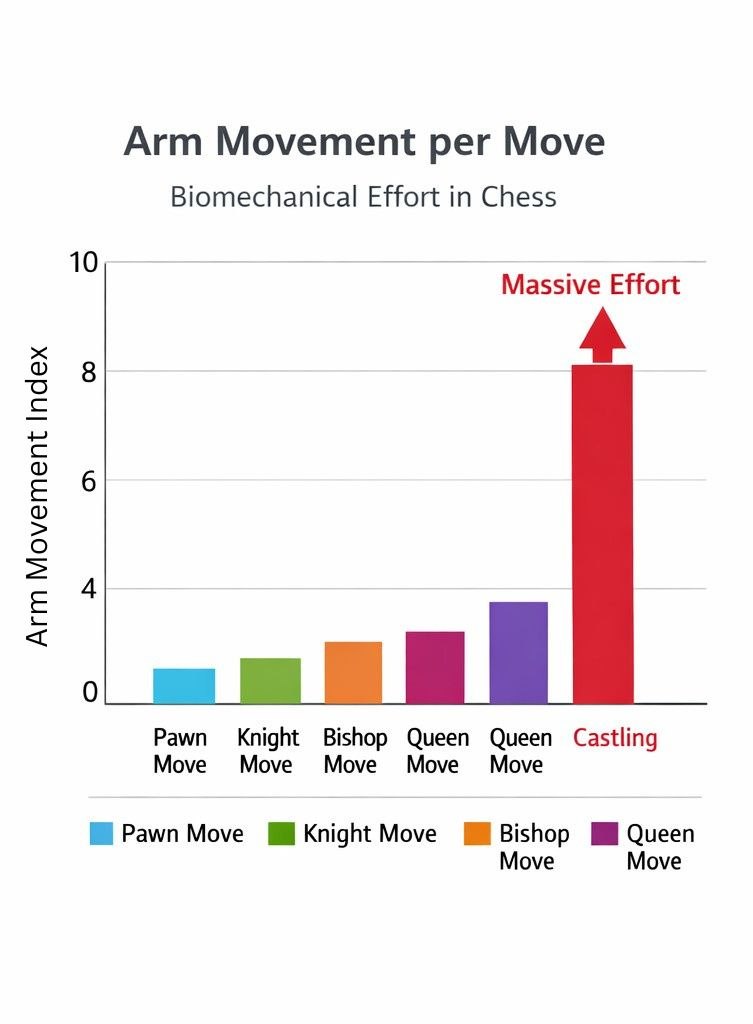
Castling is the only legal move in chess that requires a dual-piece displacement sequence.
This immediately makes it the most mechanically demanding move in the game.
A knight move?
One piece.
A pawn push?
One piece.
A rook lift?
One piece.
Castling?
Two pieces.
In a game where energy conservation is critical, this is an astonishing oversight.
Grandmasters are often seen spending five, ten, even fifteen minutes before castling.
This has traditionally been interpreted as deep positional calculation.
I propose a far more plausible explanation:
they are mentally preparing for the physical burden of the move.
In scientific terms, the hypertrophic expenditure of the finger flexor muscle groups, combined with the additional forearm activation required for a two-piece transfer, creates a surprisingly high caloric micro-load.
This is why many strong players carefully pre-calculate their hydration strategy before games in which castling is likely to occur.
Orange juice.
Still water.
Electrolyte supplementation.
And, in certain particularly demanding positions, chocolate milk.
Elite players understand that castling-heavy games often require a significantly higher level of metabolic preparedness.
This also explains why players at the highest level sometimes seem reluctant to castle quickly.
It is not hesitation.
It is energy management.
IV. The Psychological Burden of Commitment
Castling is not merely a move.
It is a commitment.
Once you castle, you have effectively signed a long-term mortgage on your king’s location.
Your opponent immediately knows where your king is likely to remain for the next 20-30 moves.
This predictability is often disguised as “king safety,” but in reality it is a form of self-imposed strategic imprisonment.
By contrast, the uncastled king roams free.
Fluid.
Adaptive.
Dare I say it:
sovereign.
This explains why many players subconsciously avoid castling and instead allow the king to remain central before eventually embarking on what is often a highly instructive kingside-to-queenside migration.
A free king is a dangerous king. Just remember that.
V. The Bongcloud Dataset: An Empirical Study
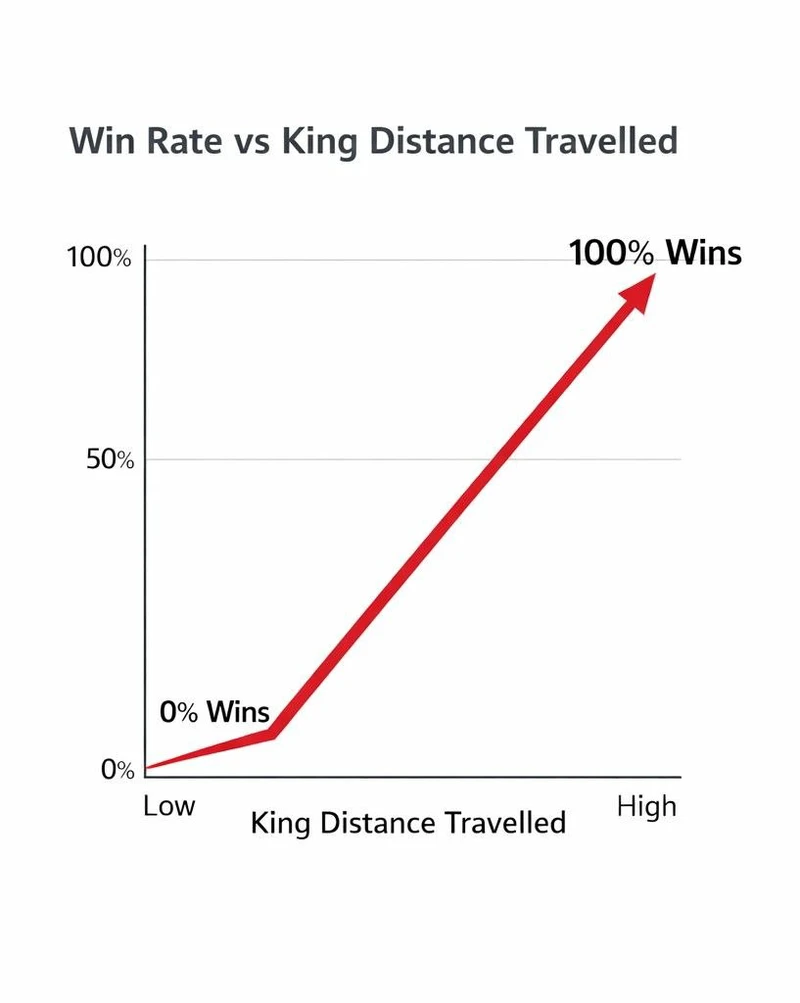
Across my entire sample of games in which I did not castle, I have never lost.
Not once.
Instead, many of these games have featured my king boldly advancing across the board, often assuming a dominant central role before eventually participating, directly or indirectly, in mating attacks.
And of course, one shall not forget about my recent blog post where GM cutemouse83 annihilated his opponent without ever resorting to such old-fashioned methods of moving the king as castling.
This suggests an extremely strong correlation between king mobility and successful outcomes.
Now, some may say:
“Correlation does not imply causation.”
Ordinarily, that would be true.
However, when the correlation happens to support my existing beliefs, I see no reason to be dogmatic about such distinctions.
The data speaks for itself.
VI. The Professional Chess Illusion
There is a widespread myth that strong players have moved beyond questioning fundamental principles.
This is statistically inaccurate.
Every player has, at some point, looked at castling and thought:
“Surely there must be another way.”
The difference is that lower-rated players are still honest enough to admit it.
As players climb the rating ladder, this spark of critical thought becomes increasingly suppressed beneath layers of convention, professionalism, and social expectation.
Strong players like to project an image of perfect discipline.
As if they would never pause mid-game to dream about chicken nuggets.
As if they do not calculate hydration, calorie intake, and muscular fatigue before deciding whether the biomechanical cost of castling is worth incurring.
But reality rarely supports this mythology.
In truth, elite chess is often less about calculation and more about fatigue mitigation protocols.
Many grandmasters are not delaying castling because of deep strategic nuance.
Truth is: they are procrastinating.
Just as all of us do when faced with a chore.
Castling, in this sense, occupies the same psychological category as brushing one’s teeth in the morning.
Necessary, perhaps.
But deeply resented.
VII. The Rise of No-Castling Chess
If castling were truly essential, how do we explain the rise of no-castling variants, aka Kramnik Chess?
If a move were genuinely fundamental, banning it would be akin to banning oxygen in a breathing competition.
And yet, top players continue to thrive in formats where castling is prohibited.
Curious.
Even more curious is the fact that many of the same players who dominate standard chess also dominate no-castling formats.
If castling were really the bedrock of chess understanding, these players should collapse immediately.
And yet they do not. Funny how that works.
The only reasonable conclusion is that castling has always been optional.
At best, a habit.
At worst, a collective delusion.
VIII. The Big Rook Theory
At some point, one must ask the uncomfortable question:
who really benefits from castling?
The answer is rather obvious.
The rook industry.
For centuries, the rook lobby has successfully promoted a narrative in which the rook must be artificially activated through king displacement.
This has led generations of players to believe that castling is not only useful, but necessary.
Follow the rook money.
Conclusion
After reviewing the evidence, the conclusion is unavoidable.
Castling is physically inefficient, psychologically burdensome, evolutionarily suspicious, statistically unsupported, and likely reinforced by centuries of rook propaganda.
Therefore, I strongly advise all readers to let go of the habit of castling upon finishing this post.
Of course, absolutely everything in this article is complete nonsense.
PLEASE castle your king.
Happy April 1st.
Unless you are playing the Bongcloud.
Then all bets are off.
You may also like
 IM Lizard1
French Defense Masterclass: Crushing a 2600+ GM
A 2600+ GM gets completely outplayed in the French Defense, and Black executes every thematic idea t… TotalNoob69
The REAL value of chess pieces
... according to Stockfish thibault
How I started building Lichess
I get this question sometimes. How did you decide to make a chess server? The truth is, I didn't. IM Lizard1
A Legendary King Walk: from g2 to a1
A white king starts on g2, survives a tactical hurricane, and somehow ends up perfectly safe on a1. CM HGabor
How titled players lie to you
This post is a word of warning for the average club player. As the chess world is becoming increasin… FM MathiCasa